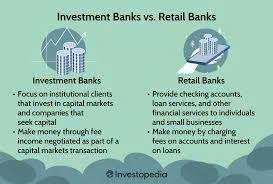
When people think about banks, they usually picture a place where they deposit money, pay bills, or apply for a loan. That’s retail banking. But banks also work closely with businesses behind the scenes — that’s corporate banking. While both are essential parts of the financial system, they serve very different customers and purposes.
Let’s break it down in a simple, practical way.
What Is Retail Banking?
Retail banking (also called personal or consumer banking) is designed for everyday people — individuals and families managing their personal finances.
This is the side of banking most Americans interact with regularly through local branches, mobile apps, ATMs, and online banking platforms.
Common Retail Banking Products
Retail banks typically offer:
-
Checking and savings accounts
-
Debit and credit cards
-
Personal loans
-
Auto loans
-
Mortgages and refinancing
-
Certificates of deposit (CDs)
-
Home equity loans or HELOCs
-
Money transfers and foreign currency services
For example, when you deposit your paycheck into a checking account, apply for a credit card, or use a banking app to pay your rent, you’re using retail banking services.
Extra Services for Some Customers
Many banks also provide additional services through specialized teams or partner companies, such as:
-
Investment accounts and stock trading
-
Insurance products
-
Financial planning and wealth management
-
Private banking for high-net-worth individuals
The level of service often depends on how much money you have and how complex your financial needs are. Someone with a basic checking account may work with a customer service rep, while a wealthy client may have a dedicated personal banker.
Technology’s Big Role in Retail Banking
Retail banking has changed dramatically with technology. Mobile apps, online banking, and ATMs have reduced the need to visit a branch in person. Today, many people can manage nearly all of their finances from their phone.
What Is Corporate Banking?
Corporate banking (often called business banking or commercial banking) focuses on helping businesses operate, grow, and manage their money.
Clients can range from small local companies to massive corporations with offices around the world.
Corporate Banking Services
Corporate banks offer tools and services that businesses rely on every day, such as:
-
Business checking and savings accounts
-
Business loans and lines of credit
-
Equipment financing
-
Commercial real estate loans
-
Cash flow and treasury management
-
Payroll and employer services
-
Trade finance for international transactions
For example, a manufacturing company might use corporate banking to finance new equipment, manage payroll for hundreds of employees, and handle payments from overseas customers.
Why Corporate Banking Matters to Banks
Corporate banking is a major source of income for banks because business loans tend to be large and long-term. However, it also carries risk. If a company fails or can’t repay its loan, the bank may suffer significant losses.
Key Differences Between Retail and Corporate Banking
Here’s a simple way to compare them:
-
Retail banking serves individuals and families
-
Corporate banking serves businesses and organizations
-
Retail products are usually smaller and standardized
-
Corporate products are often customized and larger in size
-
Retail banking focuses on daily personal finance needs
-
Corporate banking supports business operations and expansion
Despite their differences, both types of banking work together to keep the economy moving.
Why Both Types of Banking Are Important
Banks play a central role in the economy by collecting deposits and using that money to make loans. When consumers and businesses borrow and spend, economic activity grows.
History shows what happens when banking breaks down. During the 2007–2008 financial crisis, banks became reluctant to lend, businesses struggled to operate, and unemployment rose sharply. That period highlighted how critical a healthy banking system is to overall economic stability.
Benefits of Corporate Banking for Businesses
Opening a corporate or business bank account can:
-
Make a business look more professional and credible
-
Keep personal and business finances separate
-
Improve financial organization and tracking
-
Make tax reporting easier
-
Open the door to business loans and investors
For many companies, corporate banking isn’t just helpful — it’s essential.
Who Offers Retail Banking Services?
Retail banking services are commonly offered by:
-
Traditional commercial banks
-
Credit unions
-
Some investment banks and online banks
Most Americans use at least one retail banking institution in their daily lives.
How Do Banks Make Money?
Banks earn money in a few main ways:
-
Charging higher interest on loans than they pay on deposits
-
Earning interest on investments and securities
-
Collecting fees for services like account maintenance, loans, and financial advice
-
Selling related products such as insurance or investment funds
This business model applies to both retail and corporate banking.
The Bottom Line
Retail banking is all about helping individuals manage everyday money needs, from checking accounts to mortgages and mobile banking tools. Corporate banking focuses on supporting businesses with financing, cash management, and growth-related services.
Both are essential to a strong financial system. Retail banking keeps households running smoothly, while corporate banking gives businesses the resources they need to operate, expand, and create jobs. Together, they help power the U.S. economy.
What Is a Letter of Credit? A Simple Explanation for Beginners