A Personal Identification Number, or PIN, is a short string of numbers you use to prove it’s really you. Most people use a PIN with a debit card at an ATM or when making certain purchases.
Think of it as a digital key. Your debit card is the door and your PIN unlocks it.
Why PINs Matter
A PIN adds an extra layer of protection to your money.
Even if someone steals your debit card, they usually can’t withdraw cash or complete certain transactions without knowing your PIN. That extra step helps prevent fraud and unauthorized access.
In everyday life, you might use a PIN to:
-
Withdraw cash from an ATM
-
Pay with your debit card in-store
-
Access telephone banking
-
Log into certain financial apps
-
Confirm your identity for secure services
PINs aren’t limited to banking. You may also use them to unlock your phone, disarm a home security system, or verify your identity online.
How a PIN Works in Real Life
Let’s walk through a simple example.
Imagine you open a checking account and receive a debit card. Your bank may:
-
Mail you a separate letter with your PIN
-
Ask you to create your own PIN online
-
Let you set one up at a branch or ATM
Once your PIN is active, you can use it to access your account.
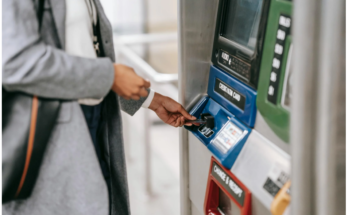
Example 1: Withdrawing Cash
You go to an ATM.
-
Insert your debit card.
-
The machine asks for your PIN.
-
You enter your four-digit code.
If the number matches what the bank has on file, the ATM gives you access to your account. If you enter it incorrectly, the machine will deny access.
Enter the wrong PIN too many times, and your card may be temporarily locked. At that point, you’ll need to contact your bank to reset it.
Example 2: Paying at a Store
You’re at the grocery store paying with your debit card.
In many cases, the payment terminal will ask for your PIN to confirm the transaction. If:
-
Your PIN is correct
-
You have enough money in your account
-
You haven’t exceeded daily limits
The purchase goes through.
For small purchases (often under $25 or $50), some terminals may not require a PIN, depending on the store and payment network.
How Long Is a PIN?
Most debit card PINs in the U.S. are four digits.
However, some banks and financial services may allow longer PINs such as six, eight, or even more digits.
While longer PINs can be more secure, they can also be harder to remember. The key is finding a balance between security and memorability.
How to Create a Strong PIN
A good PIN should be:
-
Unique (not used for multiple accounts)
-
Hard to guess
-
Easy for you to remember
Avoid:
-
1234
-
0000
-
Your birth year
-
Repeating numbers (like 1111)
-
Obvious patterns (like 2580 straight down a keypad)
For example, instead of using your birthday, you might choose a random four-digit number that has personal meaning but isn’t publicly known.
How to Keep Your PIN Safe
Protecting your PIN is just as important as choosing it.
Here are basic safety rules:
-
Never share your PIN with anyone
-
Don’t write it down in your wallet
-
Memorize it instead of storing it in your phone notes
-
Cover the keypad when entering it at an ATM or store
-
Use different PINs for different accounts
If you believe someone has seen or learned your PIN, contact your bank immediately and request a reset.
What If You Forget Your PIN?
It happens.
If you forget your PIN, you usually cannot retrieve the original number. Instead, you’ll need to reset it.
Depending on your bank, you may be able to:
-
Reset it through your mobile banking app
-
Call customer service
-
Visit a branch
-
Use an ATM to create a new one (if you remember the old PIN)
For security reasons, banks typically will not tell you your existing PIN over the phone.
Who Issues Your PIN?
When you open a bank account and receive a debit card, the financial institution typically:
-
Sends your PIN in a separate mailer for security
-
Allows you to choose your own during setup
Digital payment apps may also require you to create a PIN as an added security measure when sending money or transferring funds.
The Bottom Line
A Personal Identification Number (PIN) is a simple but powerful security tool. It protects your money by confirming your identity during financial transactions.
It may only be four numbers but those four numbers stand between your account and potential fraud.
Choose your PIN carefully. Keep it private. And treat it like the key to your financial life because that’s exactly what it is.