When you’re dealing with money—whether you’re borrowing it or saving it—you’ll often see two similar-looking terms: APR and APY. They sound almost the same, but they describe very different things, and mixing them up can cost you money.
Understanding how APR and APY work can help you choose better loans, avoid paying unnecessary interest, and earn more from your savings.
The Big Picture: APR vs. APY
Here’s the simplest way to think about it:
-
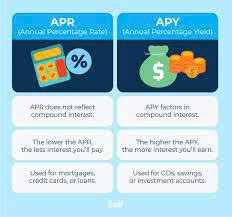
APR (Annual Percentage Rate) tells you how much it costs to borrow money.
-
APY (Annual Percentage Yield) tells you how much money you can earn on savings or investments.
One measures what you pay.
The other measures what you gain.
What Is APR?
APR is the yearly cost of borrowing money. You’ll see it on things like:
-
Credit cards
-
Car loans
-
Personal loans
-
Mortgages
APR includes the interest rate plus certain fees, which makes it more realistic than just looking at the advertised interest rate alone.
Example:
If you take out a personal loan with a 6% APR, that percentage represents the total yearly cost of borrowing, including interest and some lender fees.
However, APR does not show the effect of compounding interest. This means the actual amount you pay over time can be higher if interest is added frequently (daily or monthly), especially if you carry a balance.
Why Lenders Use APR
By law, lenders must clearly disclose APR to borrowers. This rule exists so consumers can compare loans more fairly.
For example, two credit cards might advertise similar interest rates, but the one with the lower APR usually costs less over time.
What Is APY?
APY shows how much interest you earn on money you save or invest over one year. You’ll see APY on:
-
Savings accounts
-
High-yield savings accounts
-
Certificates of deposit (CDs)
-
Money market accounts
Unlike APR, APY includes compound interest, which means you earn interest on both your original money and the interest already added.
Why Compounding Makes APY Important
Compounding is what helps savings grow faster.
Example:
You deposit $1,000 into a savings account with a 5% APY. Instead of earning interest only on your $1,000, you also earn interest on previous interest payments. Over time, this can add up to significantly more money—especially if interest compounds monthly or daily.
The more often interest compounds, the higher your APY will be, even if the base interest rate looks the same.
A Real-Life Comparison: APR vs. APY
Let’s look at a simple example.
Borrowing Money (APR)
You borrow $5,000 with a 5% APR personal loan and make monthly payments. Because you’re paying the balance down, interest is charged on a smaller amount over time. After one year, you might pay around $130–$150 in interest.
Saving Money (APY)
Now imagine putting $5,000 into a one-year CD earning 5% APY, with monthly compounding. Since you’re not withdrawing money, interest builds on itself. After one year, you could earn over $250 in interest.
Same starting amount.
Same general rate.
Very different results.
APR From a Borrower’s Perspective
If you’re borrowing money, your goal is simple: pay as little interest as possible.
That’s why APR matters. A lower APR usually means:
-
Lower monthly payments
-
Less interest paid over time
However, remember that APR doesn’t fully reflect how often interest compounds. Loans that compound monthly or daily can end up costing more than the APR suggests—especially on long-term loans like mortgages.
Tip: Always compare similar loan products and look beyond just the headline number.
APY From a Saver’s Perspective
If you’re saving money, you want:
-
The highest APY
-
Frequent compounding (monthly or daily is best)
Even a small APY difference can make a big impact over time. For example, a savings account earning 4.50% APY will grow faster than one earning 4.00% APY—even though the difference looks small at first.
Which One Is Better: APR or APY?
Neither is “better” on its own—it depends on what you’re doing.
-
Use APR when comparing loans or credit cards
-
Use APY when comparing savings accounts or CDs
Each one helps you understand the real cost or real return of a financial product.
What’s a Good APR?
A “good” APR depends on:
-
Your credit score
-
The type of loan
-
Current interest rates
Someone with excellent credit will usually qualify for much lower APRs than someone with fair or poor credit. Always compare offers for the same type of product—for example, comparing one cash-back credit card to another, not to a travel card.
Interest Rate vs. APY on a CD
This is a common source of confusion.
-
Interest rate: The basic rate paid on your balance
-
APY: The total amount you’ll earn in one year, including compounding
If you leave your money in the CD for the full term, APY is the number that matters most.
The Bottom Line
APR and APY may look similar, but they serve different purposes:
-
APR helps you understand the cost of borrowing
-
APY shows how much your money can grow
Knowing which one to focus on—and when—can help you avoid expensive mistakes and make smarter financial decisions. Whether you’re taking out a loan or building savings, always pay attention to which rate is being advertised and compare it carefully with other options.