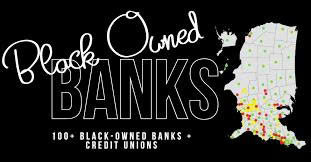
Banks have always been a cornerstone of financial life in the United States. From saving money safely to getting a loan for a car or a home, access to banking is deeply tied to opportunity and long-term financial stability. But for many Black Americans, equal access to banking has not been guaranteed.
Black-owned banks were created to fill that gap. Today, they continue to play an important role—not just by offering everyday financial services, but by strengthening local communities and expanding economic opportunity.
This guide explains what Black-owned banks are, why they exist, and where you can find them across the United States.
What Are Black-Owned Banks?
A Black-owned bank is generally a financial institution where:
-
At least 51% of ownership or voting stock is held by Black Americans, or
-
A majority of the board of directors is Black and the institution primarily serves a Black community
Under federal guidelines, these institutions are often classified as Minority Depository Institutions (MDIs) and are insured by the FDIC or NCUA.
This category includes:
-
For-profit banks
-
Member-owned credit unions that primarily serve Black communities
While ownership structures differ, they all share a common mission: expanding fair access to financial services.
Why Black-Owned Banks Exist
For much of U.S. history, African Americans faced discrimination in banking and lending. Practices like redlining, biased loan denials, and exclusion from mainstream financial institutions made it difficult for Black families to build wealth.
Black-owned banks emerged as a response to these barriers. They were founded to:
-
Provide safe places to save money
-
Offer loans when other banks would not
-
Support Black entrepreneurs and homeowners
-
Reinvest in underserved neighborhoods
Simply put, they were built because traditional banks often failed Black communities.
A Brief History of Black-Owned Banks
The first major attempt to support Black Americans financially was Freedman’s Savings Bank, created in 1865 to help formerly enslaved people manage their money. Due to mismanagement and corruption, it collapsed less than a decade later—causing devastating losses.
The first officially chartered Black-owned bank, True Reformers Bank, opened in 1888. From there, dozens of Black-owned banks formed, especially in the South.
Their numbers have risen and fallen with major economic events:
-
The Great Depression sharply reduced them
-
The Civil Rights era sparked growth
-
Financial crises in the late 20th and early 2000s caused another decline
Even today, their numbers are small—but their impact is significant.
Ongoing Banking Inequality Today
While overt discrimination is illegal, disparities still exist.
Examples include:
-
Higher mortgage denial rates for Black borrowers
-
Fewer bank branches in predominantly Black neighborhoods
-
Greater reliance on payday lenders and check-cashing services
These gaps contribute to the racial wealth divide and make institutions focused on community banking more important than ever.
As one financial expert put it: economic empowerment starts with access to banking.
Why Black-Owned Banks Are Important
Black-owned banks do more than hold money. They often:
-
Lend more frequently in low- and moderate-income areas
-
Support first-time homebuyers
-
Provide loans to small businesses and nonprofits
-
Offer financial education programs
-
Stay committed during economic downturns
During the 2008 financial crisis, for example, lending by Black-owned banks to Black borrowers increased—even as overall lending dropped nationwide.
For customers, banking with these institutions can mean:
-
More personalized service
-
Greater understanding of community needs
-
Keeping money circulating locally
Are Black-Owned Banks the Only Solution?
Not everyone agrees on the best approach to financial justice.
Some critics argue that:
-
Nonprofit credit unions and cooperatives may offer a better alternative
-
For-profit banking still operates within a system that extracts wealth
As a result, many Black-led credit unions focus on member ownership, lower fees, and reinvestment instead of profits.
The good news: consumers today have choices. Both Black-owned banks and Black-led credit unions exist nationwide.
Black-Owned Banks and Credit Unions by State
While not every state has a Black-owned financial institution, many operate across state lines or offer strong online and mobile banking options.
Below is an overview of where Black-owned banks and credit unions operate, with examples of major institutions.
States With Black-Owned Financial Institutions
Some states with notable Black-owned banks or credit unions include:
-
Alabama – Citizens Trust Bank, Liberty Bank
-
California – OneUnited Bank, City First Bank
-
Georgia – Carver State Bank, Credit Union of Atlanta
-
Illinois – GN Bank, South Side Community Federal Credit Union
-
Louisiana – Liberty Bank, Hope Credit Union
-
Michigan – First Independence Bank
-
New York – Carver Federal Savings Bank, Brooklyn Cooperative FCU
-
North Carolina – Mechanics & Farmers Bank
-
South Carolina – OPTUS Bank
-
Tennessee – Citizens Bank
-
Texas – Faith Cooperative Federal Credit Union
Many institutions also serve customers nationwide through:
-
Online banking
-
Mobile apps
-
ATM networks like MoneyPass, CO-OP, or Allpoint
Spotlight: OneUnited Bank
OneUnited Bank is currently the largest Black-owned bank in the U.S. It began as a digital-only bank and now operates physical branches in multiple states.
Beyond banking, OneUnited is widely known for:
-
Financial literacy programs
-
Credit-building tools
-
Community investment initiatives
For many customers, it’s a way to combine everyday banking with community impact.
How to Choose the Right Black-Owned Bank
When comparing options, consider:
-
FDIC or NCUA insurance
-
Fees and minimum balance requirements
-
ATM access and online features
-
Loan and credit-building products
-
Community involvement
If no local branch exists, online banking may still make membership easy.
The Bottom Line
Black-owned banks and credit unions represent far more than financial institutions. They are tools for economic empowerment, community development, and long-term wealth building.
While they are not a cure-all for inequality, they provide meaningful alternatives for consumers who want their money to work locally and ethically.
Choosing where you bank is a powerful financial decision—and for many Americans, supporting Black-owned financial institutions is one way to align money with values while meeting everyday financial needs.