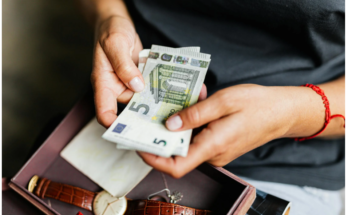
Paying with cash is starting to feel old-fashioned. Today, many people tap a card, scan a phone, or send money with an app instead of pulling bills from a wallet. From grocery stores to ride-sharing apps, digital payments are quickly becoming the norm. This shift has led to a big question: What happens if we stop using cash altogether?
A fully cashless society where all payments are electronic is no longer science fiction. Several countries are already close, and others are moving in that direction. While there are clear benefits, going cash-free also raises serious concerns that affect privacy, access to money, and financial fairness.
Let’s break it down in simple terms.
What Is a Cashless Society?
A cashless society is one where physical money paper bills and coins is rarely used or completely eliminated. Instead, people pay for everything electronically using:
-
Debit and credit cards
-
Mobile wallets like Apple Pay or Google Pay
-
Payment apps such as Zelle, Venmo, or PayPal
-
Online bank transfers
In this system, money moves digitally from one account to another. You don’t hand cash to a cashier or keep change in your pocket. Your phone or card becomes your wallet.
While many countries are reducing their reliance on cash, eliminating it entirely is much harder than it sounds.
Why Many Countries Are Moving Away From Cash
Supporters of a cashless economy argue that digital payments are faster, safer, and more efficient. Governments, banks, and businesses also see cost savings and better oversight of financial activity.
But convenience is only part of the story.
The Benefits of a Cashless Society
1. Less Street Crime and Theft
Cash is easy to steal and nearly impossible to trace. If a wallet full of cash is taken, that money is gone for good. Digital payments, on the other hand, leave records and can often be reversed or flagged.
For example, when some U.S. states switched welfare benefits from cash to electronic benefit cards (EBT), certain types of theft declined. Criminals had less incentive because the money couldn’t be easily taken or resold.
2. Clear Transaction Records
Electronic payments automatically create a record. This makes it harder to hide income, avoid taxes, or move money through illegal activities.
Cash-heavy crimes like money laundering or unreported side businesses are much harder to run when every transaction leaves a digital trail.
3. Lower Costs for Businesses and Banks
Handling cash isn’t free. Businesses must count it, store it securely, transport it, and deposit it. Banks spend millions on security, armored vehicles, and cash management.
Digital payments reduce these expenses. For many businesses, going cashless means fewer errors, less theft, and simpler accounting.
4. Easier International Spending
Anyone who has traveled abroad knows the hassle of exchanging currency. In a mostly cashless world, your card or phone handles the conversion automatically.
For example, instead of exchanging U.S. dollars for local cash, you simply tap your phone, and the payment processes instantly in the local currency.
The Downsides of Living Without Cash
Despite the benefits, a cashless society comes with serious trade-offs especially for everyday consumers.
1. Loss of Privacy
Cash allows you to spend money without leaving a digital footprint. Electronic payments do not.
Every swipe, tap, or transfer can be tracked, stored, and analyzed. Even if you trust banks and payment apps, data breaches happen. The more personal financial data that exists online, the greater the risk it falls into the wrong hands.
2. Risk of Hacking and Fraud
In a cash-only world, a thief has to physically take your money. In a cashless world, hackers can steal from you remotely.
If your bank account or payment app is compromised, you could temporarily lose access to all your money. While U.S. laws offer protections, fixing the problem can take days or weeks time when bills still need to be paid.
3. Technology Failures Can Leave You Stuck
No system is perfect. Power outages, internet failures, software glitches, or even a dead phone battery can suddenly prevent you from paying.
Imagine being at a gas station during a system outage with no cash accepted. Even though you “have money,” you can’t use it.
4. Financial Inequality May Get Worse
Not everyone has a smartphone, reliable internet, or a bank account. In the U.S., millions of people are still unbanked or underbanked.
If digital payments become mandatory, low-income individuals, older adults, and rural communities could be left behind. Cash currently acts as a financial safety net for those without access to modern banking tools.
5. Fees Could Increase
Payment apps and card networks make money through fees. If consumers have no alternative to digital payments, companies may raise costs quietly over time.
Small fees on every transaction can add up, especially for people living paycheck to paycheck.
6. Spending Becomes Too Easy
Handing over cash makes spending feel real. You physically see money leave your hands.
Digital payments remove that mental friction. Tapping a phone or clicking “Pay Now” can make it easier to overspend without realizing how much you’re using.
7. Negative Interest Rates Could Hurt Savers
In a fully digital system, banks could pass negative interest rates directly to customers. That means your balance slowly shrinks just for keeping money in the bank.
Today, people can withdraw cash to avoid those penalties. In a cashless world, that escape option disappears.
How a Cashless Society Might Function
A future without cash would rely on several tools working together:
-
Cards: Still widely used, but likely secondary to mobile payments
-
Payment apps: Used for sending money between people and paying bills
-
Mobile wallets: Phones replacing physical wallets
-
Digital currencies: Including cryptocurrencies, though widespread everyday use remains unlikely due to volatility and regulation
Each option has strengths but none are perfect on their own.
Real-World Examples
Sweden: Mostly Cash-Free
Sweden is one of the closest countries to becoming cashless. Many stores don’t accept cash at all, and most people are comfortable with digital payments.
However, elderly residents and those with limited tech access still depend on cash, creating ongoing challenges.
India: A Sudden Shift
India attempted to reduce cash use by removing large-denomination bills from circulation. While digital payments briefly surged, cash usage eventually returned to previous levels.
The transition highlighted how difficult it is to move quickly without harming vulnerable populations.
The Bottom Line
A cashless society offers convenience, efficiency, and improved tracking but it also raises serious concerns about privacy, access, and control over personal money.
For now, cash still plays an important role, especially as a backup during emergencies and for people outside the traditional banking system. Whether cash eventually disappears or remains a financial safety net is still an open question.
One thing is clear: how we pay matters just as much as how much we earn.
Please take a look at this as well:
A Beginner’s Guide to Paying Your Bills Online