Depositing a check might feel simple: hand it to the teller (or snap a photo in your banking app), see the money show up in your account, and assume you’re good to go.
But here’s the truth: just because the money appears in your account doesn’t mean the check has fully cleared.
If you spend the funds too soon and the check bounces, you could be responsible for paying the bank back plus fees. Let’s break down what actually happens behind the scenes and how long you should wait before using that money.
When Can You Use the Money?
Banks in the U.S. are required by federal law to follow specific “funds availability” rules. That means they must make at least part of your deposit available within a set time frame even if the check hasn’t officially cleared yet.
Typically Available the Next Business Day
Many checks must be available by the next business day if deposited in person, including:
-
Cashier’s checks
-
Certified checks
-
Government-issued checks (federal or state)
-
Checks drawn from another account at the same bank
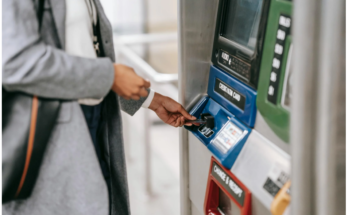
If you deposit one of these at an ATM, the funds are usually available within two business days instead of one.
What About Personal Checks?
Personal checks are treated more cautiously.
In most cases:
-
The first $200 must be available within one business day.
-
The rest may be held for several more days.
For larger deposits, banks often place extended holds on the remaining balance.
Important: Availability does not equal clearance. It just means your bank is temporarily advancing you the money while waiting for confirmation from the check writer’s bank.
So, How Long Does It Take for a Check to Clear?
Most checks take two to three business days to either clear or bounce.
During this time:
-
Your bank sends the check to the writer’s bank.
-
The writer’s bank confirms whether the account has sufficient funds.
-
If everything checks out, the funds officially transfer.
If there isn’t enough money in the account or the check is fraudulent the check “bounces.”
What Happens If a Check Bounces?
This is where people get into trouble.
Let’s say you deposit a $2,000 check from someone you just met. The money shows up in your account the next day, so you send $1,500 to pay a contractor.
Three days later, the check comes back unpaid.
Now:
-
The $2,000 disappears from your account.
-
You’re still responsible for the $1,500 you sent.
-
You may owe overdraft fees or returned payment fees.
You’re on the hook even though you didn’t write the bad check.
The Real Risks of Spending Too Soon
Here’s what can happen if you use funds before the check fully clears:
1. Reversed Deposits
Your bank removes the funds from your account.
2. Overdraft Fees
If your balance drops below zero, you could face overdraft charges.
3. Returned Payments
Any checks or debit transactions you made could bounce.
4. Extra Fees from Others
Landlords, utility companies, or merchants may charge returned payment fees.
In worst-case scenarios, people end up owing hundreds or even thousands of dollars.
How to Know If a Check Has Fully Cleared
The word “cleared” can be misleading. Sometimes bank employees use it to mean the funds are available not that the check has officially settled between banks.
If you want certainty:
-
Visit a branch in person.
-
Ask a manager directly whether the check has fully cleared from the issuing bank.
-
Explain that you are concerned about potential fraud.
Don’t just ask, “Can I spend it?” Ask, “Has the paying bank confirmed and transferred the funds?”
What to Do If a Check Seems Suspicious
If something feels off, trust your instincts.
1. Avoid Depositing It
The safest option is not accepting questionable checks at all.
2. Call the Issuing Bank
Look up the bank’s official customer service number online.
Do not use the phone number printed on the check scammers often print fake numbers.
3. Wait at Least 30 Days
If you decide to deposit a suspicious check, wait a full 30 days before spending any of it.
Most fraudulent or insufficient-funds checks will bounce within a few weeks. International checks may take longer.
Even after 30 days, there’s still a small risk for example, if the real account holder later claims fraud.
Watch Out for Fake Check Scams
Fake check scams are surprisingly common in the U.S.
A typical scenario:
-
Someone sends you a check for more than what they owe.
-
They ask you to send the extra money back via wire transfer, gift cards, or an app.
-
The check later bounces.
-
You lose whatever money you sent them.
The reason this works? People assume that “available” means “safe.”
It doesn’t.
If someone asks you to deposit a check and send part of it back, that’s almost always a scam.
Are There Safer Alternatives to Checks?
If you’re worried about bounced checks, consider other payment methods:
-
Wire transfers (funds only move if they actually exist)
-
Money orders
-
Payment apps like PayPal or Venmo
-
Bank-to-bank transfers (ACH)
No method is 100% scam-proof, but electronic transfers often leave clearer documentation if disputes arise.
How Long Is a Check Good For?
In most cases, checks are valid for six months (180 days).
After that, banks may still accept them but they are not required to. It’s best to deposit checks as soon as possible.
How Long Does a Cashier’s Check Take?
A cashier’s check is generally available the next business day if deposited before your bank’s cutoff time.
If you deposit it after the cutoff for example, at 5:15 p.m. when the bank’s deadline is 5:00 p.m. It will likely be treated as if deposited the next business day.
Please take a look at this as well: