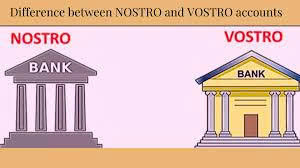
If you’ve ever sent or received money across borders—or wondered how banks handle international payments behind the scenes—you may have come across the terms Nostro account and Vostro account. They sound complicated, but the idea behind them is actually pretty straightforward.
These accounts are essential to global banking, helping money move smoothly between countries and currencies. Let’s break them down in a beginner-friendly way.
Big Picture: Same Account, Two Viewpoints
A Nostro account and a Vostro account are not two different accounts. They are the same bank account, just described from opposite sides.
-
Nostro means “our account with you”
-
Vostro means “your account with us”
The words come from Italian banking language and are still used today to help banks clearly track international money.
What Is a Nostro Account?
A Nostro account is a bank’s account held in a foreign bank, usually in a foreign currency.
Think of it this way:
“This is our money, sitting in your bank, in your country.”
Why Banks Use Nostro Accounts
Banks use Nostro accounts to:
-
Make international payments faster
-
Hold foreign currency
-
Settle foreign exchange (FX) transactions
-
Support global trade and remittances
Simple Example
A U.S. bank wants to easily send euros to Europe. Instead of converting money every time, it keeps a euro-denominated account at a European bank. That account is the U.S. bank’s Nostro account.
From the U.S. bank’s perspective, this account is an asset, because it’s money the bank owns.
What Is a Vostro Account?
A Vostro account is how the foreign bank describes that same account.
In other words:
“This is your money, kept with us.”
The Vostro account sits on the local bank’s books and represents funds it holds on behalf of another bank.
Key Point
-
The account is held locally
-
The money belongs to a foreign bank
-
The currency is usually the local currency
From the local bank’s perspective, the Vostro account is a liability, because the money belongs to someone else.
A Real-World Example
Imagine this situation:
-
A Nigerian bank has many customers receiving money from the U.S.
-
The Nigerian bank doesn’t have branches in the United States.
-
It opens a U.S. dollar account at a large American bank.
Here’s how it looks from both sides:
-
For the Nigerian bank:
The U.S. dollar account at the American bank is a Nostro account. -
For the American bank:
That same account is a Vostro account it holds for the Nigerian bank.
When money is sent from the U.S., it goes into this account, gets transferred securely through international banking systems, and is eventually converted and deposited into customers’ local accounts.
Key Differences at a Glance
| Feature | Nostro Account | Vostro Account |
|---|---|---|
| Meaning | Our account with you | Your account with us |
| Perspective | Foreign bank’s view | Local bank’s view |
| Ownership | Owned by the foreign bank | Held on behalf of foreign bank |
| Currency | Usually foreign currency | Usually local currency |
| Accounting | Asset | Liability |
Why Nostro and Vostro Accounts Matter
These accounts make international banking possible without chaos.
They help banks:
-
Process cross-border payments
-
Support imports and exports
-
Handle currency exchange efficiently
-
Keep accurate records from both sides
Without them, global trade and international money transfers would be slower, more expensive, and far more complicated.
Who Uses Nostro and Vostro Accounts?
You’ll typically see these accounts used by:
-
Large commercial banks
-
Central banks
-
International corporations
-
Financial institutions involved in foreign exchange
Everyday consumers usually don’t see these accounts—but they benefit from them whenever they send money abroad.
The Bottom Line
Nostro and Vostro accounts are two ways of describing the same international bank account, depending on who’s talking.
-
Nostro: “Our money, held by you”
-
Vostro: “Your money, held by us”
Together, they play a crucial role in keeping international payments accurate, transparent, and efficient—forming a quiet but essential backbone of the global financial system.